Event logistics is the end-to-end coordination of people, gear, schedules, and approvals that makes an event run safely and on time. It covers permits, timelines, power, staging, transport, load-in/out, and on-site control. For Midland weddings and corporate events, strong logistics turn creative ideas into a smooth, stress-free experience.
By Revel Entertainment • Last updated: 2026-07-05
Overview
Great event logistics align vision with reality by mapping every dependency—venue rules, power, rigging, load paths, crew, and timing—so showflow stays on time and safe. This guide explains what logistics is, why it matters, how it works step by step, and the best practices we use at Revel Entertainment.
Here’s the thing: an unforgettable dance floor, LED walls, and perfect speeches only land when the back-end is tight. In our experience producing South Asian and Indian wedding weekends, the difference between magic and mayhem is a clear plan and a team that owns it end to end.
- What you’ll learn: definitions, roles, timelines, permits, power, staging, crew flow.
- Why it matters: safety, on-time showflow, guest experience, and planner peace of mind.
- How it works: discovery, site survey, design and logistics, load-in, rehearsal, showtime, strike.
- South Asian specifics: baraat routes, sangeet run-of-show, reception transitions, afterparty resets.
- Tools we use: Atlas venue intelligence, run sheets, comms, checklists, and cue stacks.
- Table of contents
- What is event logistics?
- Why event logistics matters
- How event logistics works (step-by-step)
- Types, methods, and approaches
- Best practices
- Tools and resources
- Case studies and examples
- Frequently asked questions
- Key takeaways
- Conclusion and next steps
What is event logistics?
Event logistics is the disciplined planning and on-site execution that moves an event from concept to reality. It integrates timelines, transport, load-in paths, power and rigging checks, crew assignments, safety, rehearsals, and contingency plans so every cue happens exactly when and how it should.
At Revel Entertainment, logistics sits alongside DJ, MC, lighting, LED walls, and production design as a core capability. We design experiences and engineer how they happen—so the baraat starts on time, the sangeet transitions are tight, and the reception sounds and looks phenomenal.
- Scope: timelines, vendor coordination, venue rules, permits, freight elevators, dock access, stage plots, and cable runs.
- Technical checks: power distribution, phase loads, rigging points, truss safety, and special-effect allowances (e.g., cold sparks, fog).
- Operational control: crew call sheets, comms, cue sheets, rehearsal windows, and strike plans.
Consider a Midland reception with LED walls and moving heads. Without verified power and rigging, the look you imagined won’t deploy safely. With proper event logistics—validated in advance through our Atlas venue intelligence—those elements load in cleanly and go live right on cue.
Self-contained answer: Event logistics ensures your program, production, and guest movement stay in sync. It converts a creative storyboard into a safe operational plan, assigns the right people to each task, and establishes fallback options so the show continues even if something changes.
Why event logistics matters
Strong logistics protect guest safety, uphold venue rules, and keep your timeline on track. When crews, power, routes, and rehearsals are planned, your moments land emotionally—without delays, confusion, or tech hiccups—so hosts and planners can be fully present.
You might be wondering: isn’t great music enough? The reality is that high-energy dance floors and cinematic lighting need stable power, safe rigging, and coordinated timing. A missed loading window, a tripped breaker, or an unapproved effect can derail an otherwise perfect plan.
- Safety first: proper power distribution, clear egress, and rated rigging hardware prevent incidents.
- On-time showflow: cue stacks for entrances, speeches, performances, and open dance maintain rhythm.
- Venue compliance: permits, noise windows, and effect policies avoid last‑minute cancellations.
- Guest experience: seamless transitions keep energy high and reduce dead air.
- Planner peace of mind: documented run sheets and comms keep everyone aligned.
In our Midland weekend timelines, we buffer changeovers and lock down routes between ceremony, cocktail hour, and reception spaces. This protects the couple’s moments and gives catering, photo/video, and décor teams room to work without stepping on each other’s cues.
Self-contained answer: Event logistics matters because it converts risk into certainty. It’s the difference between sprinting to catch up and calmly executing a plan. Done right, it safeguards people, timeline, and creative goals—so your event feels effortless to guests.
How event logistics works (step-by-step)
Effective logistics follows a repeatable path: discovery, site survey, design and operations planning, pre-production checks, load-in, rehearsal, show control, and strike. Each phase confirms assumptions, assigns owners, and builds redundancy so the show runs on time—even when variables change.
- Discovery: goals, guest count, cultural flow (baraat, sangeet, reception), and creative priorities.
- Site survey: measure load paths, power, rigging, ceiling height, stage sizes, and effect allowances.
- Design + logistics: finalize stage plots, LED wall specs, lighting positions, and cable maps.
- Pre‑production: lock crew calls, trucking, dock reservations, and contingency plans.
- Load‑in: sequence truss, power, LED walls, audio, and focus lighting before décor installs.
- Rehearsal: walk entrances, check mics, run opening cues, and balance sound.
- Show control: call cues, monitor power, adjust to program changes, and protect timeline.
- Strike: safe load‑out, inventory checks, and venue sign‑off.
Powered by Atlas, our in‑house venue intelligence platform, we validate capacity, power, rigging points, and effect rules before anything is booked. That early clarity prevents redesigns and ensures the Midland plan we present is practical, safe, and approved.
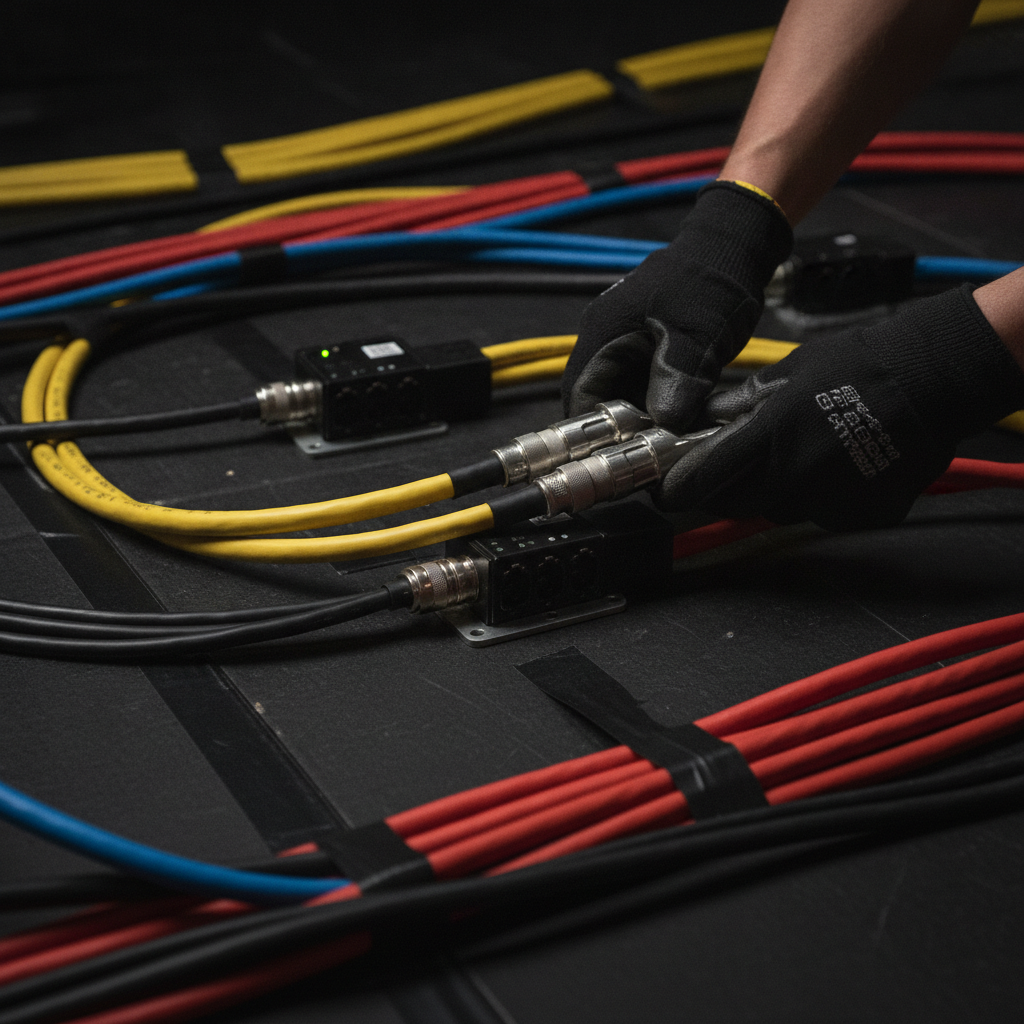
Self-contained answer: The best logistics process is transparent and document-driven. It lists tasks, owners, timing, and dependencies; validates venue reality; stages load-in in the right order; rehearses key moments; and keeps communications open so surprises are handled without derailing the show.
Types, methods, and approaches
Event logistics can be managed by one integrated production team, by multiple separate vendors, or in a hybrid. Integrated teams reduce friction by uniting DJ/MC, lighting, LED walls, audio, and operations under one plan—minimizing gaps and accelerating decisions.
Common delivery models
- Integrated production (one-vendor): one team owns entertainment, lighting, visuals, sound, and logistics. Benefits: fewer handoffs, faster decisions, unified cueing.
- Multi-vendor (split ownership): separate DJ, lighting, A/V, and coordinator. Benefits: specialization; Risks: misaligned timelines, duplicated gear, unclear ownership.
- Hybrid: a lead production vendor plus specialty partners (e.g., décor or pyrotechnics) reporting into one run sheet.
South Asian wedding specifics
- Baraat routes: mobile sound coverage, dhol, and safety marshals along the path.
- Sangeet programming: performance blocks with quick mic changeovers and LED wall cues.
- Reception transitions: speeches, special dances, and open dance with tight timing.
- Afterparty resets: sound reconfiguration to protect neighbors while keeping energy high.
Comparison table
| Approach | Coordination Overhead | Risk of Gaps | Change Agility | Best For |
|---|---|---|---|---|
| Integrated production team | Low | Low | High | Weekend weddings, complex visuals |
| Multi-vendor split | High | Medium–High | Medium | Simple programs with minimal tech |
| Hybrid with lead vendor | Medium | Medium | High | Custom builds with specialty partners |
Self-contained answer: Choose an integrated approach when your program includes multiple spaces, LED walls, or complex cueing. Use hybrid when you need a specialist but want one command center. Use multi-vendor only when the program and production are truly simple.
Best practices
The best logistics plans are written, owner-assigned, and rehearsed. They validate venue realities early, sequence load‑in properly, protect safety, and leave buffer time between key moments—so creative choices aren’t constrained on show day.
- Document everything: run sheets, contact lists, stage plots, and power maps—shared with all vendors.
- Confirm venue rules: effect permissions, noise windows, dock hours, freight elevators, and fire lanes.
- Sequence load‑in: truss and power first; LED walls and audio next; focus and tuning before décor.
- Buffer critical transitions: entrances, performances, and special dances.
- Protect egress: keep exits, aisles, and ADA routes clear—always.
- Standardize comms: channel plan for stage managers, audio, lighting, DJ/MC, and planners.
- Rehearse mic handoffs: test every microphone and cue from the actual stage positions.
- Plan redundancy: spare mics, backup playback, and alternate power feeds when possible.
- Monitor power: distribute loads across phases and verify with meters, not guesses.
- Debrief post‑event: adjust timelines and checklists for your next show.
For a deeper dive into how a one‑team model simplifies your wedding weekend, see our full‑service event production guide.
Self-contained answer: Best practices boil down to clarity, safety, and sequencing. Write the plan, assign owners, rehearse, and meter your power. When everyone knows their role and the route, the event feels effortless for hosts and electric for guests.
Want a logistics sanity check?
We’ll review your Midland timeline, venue rules, and production map, then flag risks and fixes—before you lock vendors. Start with our integrated planning approach in the full‑service production overview.
Tools and resources
Rely on checklists, floor plans, cue stacks, channel plans, and venue intelligence. The right tools keep details visible and make it easy for teams to coordinate—so nothing important lives only in someone’s head.
Core tools we use at Revel
- Atlas venue intelligence: verifies capacity, rigging, power, and effect rules before booking.
- Stage plots and cable maps: clear positions and safe cable paths for all departments.
- Run sheets and cue stacks: minute-by-minute flow with cues for DJ/MC, lighting, audio, and visuals.
- Comms plan: channels for stage, audio, lighting, DJ/MC, and coordinators.
- Checklists: load‑in sequence, safety checks, mic inventories, and strike order.
Helpful planning references
For venue conversations and cultural programming, it’s useful to review third‑party checklists and planning overviews. These aren’t a substitute for local rules, but they can spark the right questions with your team.
- See a comprehensive South Asian venue checklist for discussion prompts with venues and planners.
- Review an Indian wedding coordinators guide to structure your run-of-show for multi‑event weekends.
- Skim common planning mistakes as reminders to validate assumptions early.
Self-contained answer: Use visual diagrams and shared documents to align teams. Venue intelligence prevents surprises, run sheets synchronize departments, and checklists reduce missable details. Keep everything accessible to vendors and update versions as the plan evolves.
Case studies and examples
Logistics wins are visible in the moments you don’t notice: on-time entrances, flawless mic swaps, and lighting and LED walls that simply work. Here are three real-world scenarios that show how an integrated approach keeps Midland events calm and electric.
Midland sangeet in a hotel ballroom
- Challenge: multiple performances, rapid mic changeovers, dancers entering from both sides, and an LED wall backdrop.
- Approach: stage manager with cue stacks; dedicated audio tech at side stage; pre-labeled mics; LED wall operator aligned to each performance slate.
- Outcome: no dead air between items; crisp audio and visuals; guests engaged throughout.
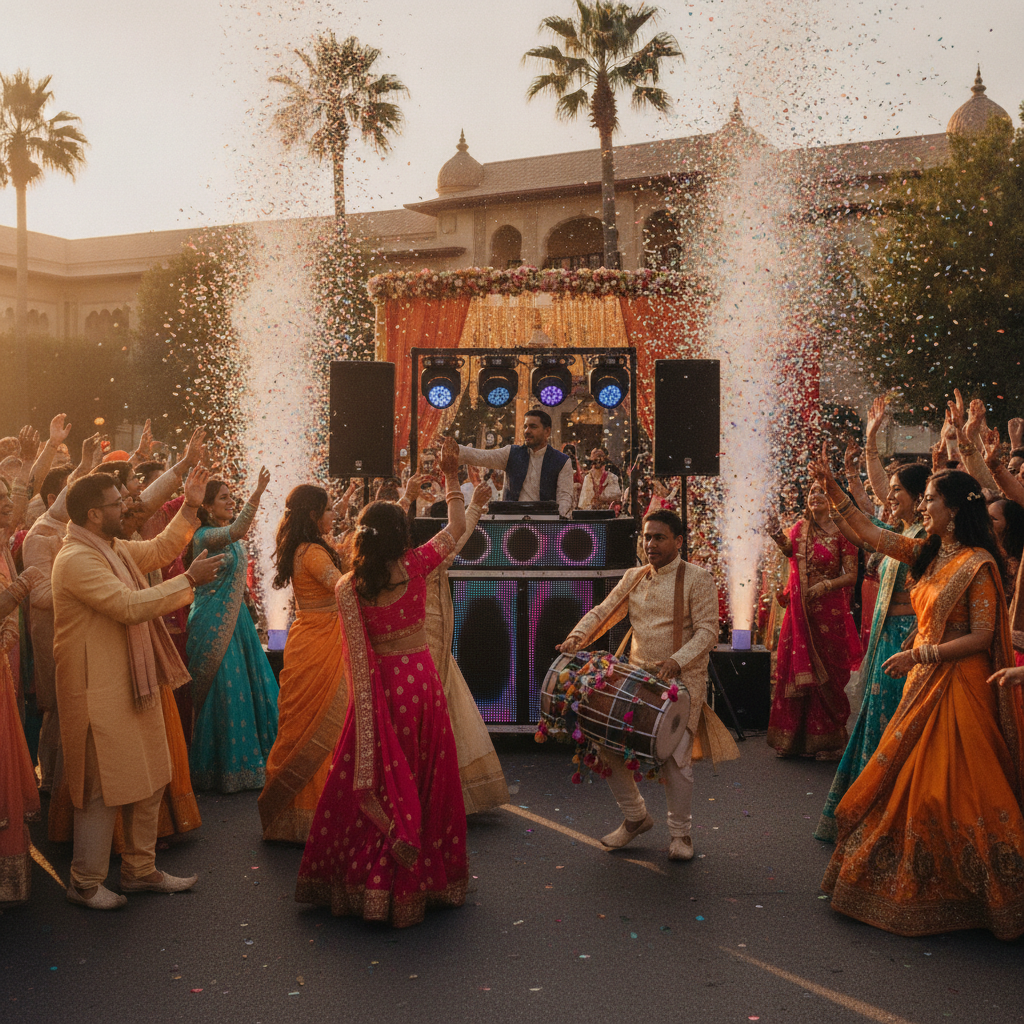
Outdoor baraat with mobile sound
- Challenge: moving crowd, varying street noise, safe effect use, and handoffs into indoor ceremony.
- Approach: mobile DJ cart, dhol lead, safety marshals, and clear radio comms; buffer time at entry point for the transition indoors.
- Outcome: energetic procession, smooth indoor changeover, on-time ceremony start.
Corporate gala with stage program
- Challenge: sponsor loops on LED walls, award walk-ups, and a live band set after the program.
- Approach: dual playback systems for redundancy; backline changeover plot; precise run sheet with buffer after the final award.
- Outcome: smooth award pacing, zero playback hiccups, and a dance floor that opened exactly on schedule.
Local considerations for Midland
- Plan for venue-specific noise windows and coordinate your baraat timing accordingly, especially if your route passes through residential corridors.
- Account for seasonal heat and humidity; protect performers and gear with shade options and hydration stations during outdoor segments.
- Confirm load paths and dock access early; some Midland venues share back-of-house spaces with other events, so booking slots matters.
Self-contained answer: In each scenario, success came from one thing—owning the run of show and the mechanics that make it possible. With a clear plan, Midland venues become backdrops for amazing moments instead of obstacles to navigate.
Frequently asked questions
These quick answers address the most common event logistics questions we hear from Midland couples and planners. Each one keeps you focused on safety, timing, and guest experience—without getting lost in technical jargon.
What exactly does an event logistics lead do?
They own the timeline, venue rules, vendor coordination, and on-site decisions. They publish the run sheet, call cues, solve route and power issues, and keep the program on time so creative elements land as planned.
How early should we confirm venue power and rigging?
As soon as you shortlist a venue. We validate power, rigging, ceiling height, and effect rules before booking through our Atlas venue intelligence, so the design you love is feasible and approved from day one.
Do we need rehearsals if our program is simple?
Yes—rehearsals are where mic levels, walk paths, and cue timing get locked. Even a short run-through prevents dead air and avoids awkward transitions, especially for entrances and speeches.
What makes South Asian wedding logistics different?
Multi-event flow. You’ll likely have a baraat, sangeet, reception, and afterparty, often across different spaces. That demands mobile sound coverage, performance-ready staging, tight mic swaps, and quick resets between segments.
Key takeaways
Event logistics turns creative vision into a safe, on-time reality. Validate venue realities, write and share your plan, assign owners, rehearse, and build buffers. With one integrated team, Midland events feel effortless for you and electric for your guests.
- Event logistics is the engine behind safety, timing, and guest experience.
- Integrated teams reduce handoffs and accelerate decisions.
- Atlas-style venue intelligence prevents redesigns and delays.
- Rehearsals and buffers protect your most important moments.
Conclusion and next steps
The fastest path to a smooth event is one accountable team, a documented plan, and early venue validation. When the back-end is tight, your Midland wedding or gala feels effortless—and the moments you care about land perfectly.
If you remember nothing else, remember this: plan the route, power, and people before you book. In our integrated model, entertainment, lighting, visuals, sound, and logistics sit under one roof, so Midland weekends move as one.
Next steps:
- Outline your program’s key moments and any moving segments (e.g., baraat).
- Schedule a venue walk-through to confirm power, rigging, and load paths.
- Draft a run sheet with owners for every cue and share it with all vendors.
- Lock a rehearsal window and protect buffers around entrances and speeches.
Ready to make your timeline feel effortless? Let’s map your Midland weekend together.