Production design is the integrated planning of audio, lighting, visuals, staging, and logistics that shapes an event’s mood and flow. For Midland weddings, it turns rituals and receptions into one cohesive experience by aligning DJ and MC cues with safe, venue-verified effects. The outcome is cinematic moments, on-time transitions, and an effortless guest experience.
By Revel Entertainment · Last updated: 2026-06-24
Summary
Wedding production design aligns music, lighting, visuals, staging, and timing to create unforgettable moments while keeping the show on schedule. The result is a dance floor that stays full, speeches that land, and visuals that honor your cultural story—engineered safely for your venue’s power, rigging, and effect rules.
Here’s the big idea: production design is the master plan for how your celebration will look, sound, and move. It blends creative intent—color palettes, cultural cues, and emotional beats—with technical realities like power capacity, load-in routes, and safety. When these pieces work as one, your guests feel the difference within the first few minutes of arrival.
Teams like ours operate as an integrated unit—DJ, MC, lighting, LED walls, audio, staging, and logistics—so design choices translate cleanly into execution. We use a structured process (consultation, music and mood questionnaire, design and logistics, venue site visit, and showtime) to eliminate surprises and protect the timeline.
What Is Production Design?
Production design for weddings is the creative and technical blueprint that unites DJ, MC, audio, lighting, visuals, staging, and logistics into one show. It turns a venue into a living set where cues and effects elevate rituals, speeches, and the dance floor—without day-of surprises.
Think of production design as your event’s control system. It takes your vision—mood, cultural moments, favorite genres—and maps them to a technical plan that works inside your venue’s real limits. In practice, it spans:
- Entertainment: open-format DJ and culturally fluent MC who set tone and pace across baraat, sangeet, ceremony, reception, and afterparty.
- Lighting: uplights, washes, moving heads, profiles, gobos, pin-spots, and haze—programmed into scenes for entrances, toasts, and open dance.
- Visuals: LED walls, projection mapping, and ambient content loops that reinforce your palette and décor.
- Audio: ceremony mics, reception PA, monitors, and zoned coverage for conversation areas versus the dance floor.
- Staging: risers, scenic backdrops, and glossy dance floors engineered for clear sightlines and photos.
- Logistics: site survey, load-in paths, power maps, comms, permits, and a documented run of show.
Useful benchmarks help couples make smart choices. A single DMX universe controls up to 512 channels, so complex lighting rigs often span multiple universes. Indoor LED walls commonly use 2.6–3.9 mm pixel pitch for crisp visuals at typical viewing distances. During toasts, many audio engineers target roughly 70–75 dB at dinner tables so elders hear comfortably while conversation feels natural.
At Revel Entertainment, we connect these dots early. Our Atlas venue intelligence platform validates capacity, rigging, power, and whether effects like cold sparks or low fog are permitted—so your production design is grounded in reality before anything is booked.
Why Production Design Matters for South Asian Weddings
South Asian wedding weekends involve high-energy rituals and rapid transitions. Production design preserves cultural flow while engineering sound, lighting, and visuals so every moment lands—an electric baraat, a spotlight-ready sangeet, and reception speeches that are heard clearly without feedback.
South Asian and Indian celebrations aren’t single events—they’re multi-part experiences with distinct vibes. Each segment benefits from tailored cues, mood, and pacing:
- Baraat: outdoor-friendly audio, mobile power plans, upbeat Bollywood and bhangra with clear MC direction; 95–100 dB at the dance cluster keeps energy high without overpowering nearby areas.
- Sangeet: performance lighting with sidefills and pin-spots; LED backdrops that make casual videos look pro; haze balanced so beams pop without clouding faces in photos.
- Ceremony: intelligibility over impact—lapel and handheld mic redundancy, discreet speakers placed for even 65–70 dB coverage so vows feel intimate.
- Reception: warm dinner looks (2700–3200K whites), then saturated palettes and dynamic movement when the dance floor opens; cold spark moments timed to chorus hits.
- Afterparty: club-forward looks, tighter beams, and a more aggressive mix curve—while exits and transportation logistics stay clear.
In our experience, production design is the difference between “pretty décor” and a show that breathes with your story. Music programming, MC pacing, and scene changes guide guest energy so the room peaks at the right times. For Midland couples, that often means keeping dinner at a relaxed 70–75 dB, then building to 95 dB peaks on the dance floor as the night unfolds.
We also guard against common pitfalls: overly bright dinner lighting that ruins photos, harsh RGB mixes that flatten skin tones, and low-power circuits that introduce audio hum. By validating power and rigging early, we maintain headroom—so looks stay clean and the sound stays punchy all night.
How Production Design Works (Step-by-Step)
The most reliable production design follows a structured path: consult, music/mood questionnaire, design and logistics, venue site visit, and showtime. Each stage converts ideas into technical specs so power, rigging, content, and cues are locked before load-in.
- Consultation: align on story, musical tastes, guest mix, and must-have moments. We sketch an energy curve from arrival through last track.
- Music and mood questionnaire: capture do-play/don’t-play, entrance cues, and cultural notes. This documents transitions (e.g., soft gold dinner looks shifting to magenta-and-sapphire dance scenes).
- Design + logistics: produce lighting plots, LED wall layout, content direction, audio zones, and FX feasibility. We separate power for audio and lighting to avoid interference.
- Venue site visit: verify capacity, rigging points, power tie-ins, load-in paths, ceiling heights, and whether haze/cold sparks are permitted. Atlas stores these findings for the team.
- Showtime: one integrated crew on comms executes the run of show. We program scenes in advance and refine cues during soundcheck and rehearsals.
| Stage | Main Tools | What You Receive |
|---|---|---|
| Consult | Planning call, sample playlists | Aligned creative direction and energy map |
| Questionnaire | Music/mood form | Do-play list, cultural cues, transitions |
| Design & Logistics | Plots, renders, power plan | Visual + technical blueprint and FX plan |
| Site Visit | Atlas venue intelligence | Feasibility confirmed; risks mitigated |
| Showtime | On-site production | Seamless, high-impact event |
Two numbers guide reliability: redundancy and headroom. Redundancy means backup mics and spare playback paths. Headroom means we design audio and power usage to stay under roughly 70–80% of available capacity, so peaks never clip and breakers never trip when the dance floor surges.
Types, Methods, and Approaches
Core production methods span lighting design, LED visuals, audio coverage, staging, and special effects. The best teams mix intentionally—choosing fixtures, content, and FX that serve the story, fit the room, and meet venue rules without straining power or sightlines.
Production design is a palette. Each discipline paints a different layer of the picture, and together they create the vibe your guests feel. Here’s how we think about the major components.
Lighting approaches
- Uplighting: establishes a base color wash. Dim to about 30–40% during toasts so skin tones look natural in photos.
- Moving heads & profiles: add motion and texture. Crisp gobos create pattern without visual clutter; keep pan/tilt slow during dinner, faster after open dance starts.
- Pin-spots: small aim, big payoff—centerpieces, cake, and sweetheart table glow without blasting the room.
- Haze control: a light haze reveals beams while staying camera-friendly. We monitor airflow so beams are visible without fogging faces.
Color temperature matters. Warm whites (around 3000K) flatter skin more than cold blues during dinner. During dance sets, saturated colors (magenta, teal, amber) pair well with rhythmic beam movement to telegraph “it’s time to party.”
LED walls & projection
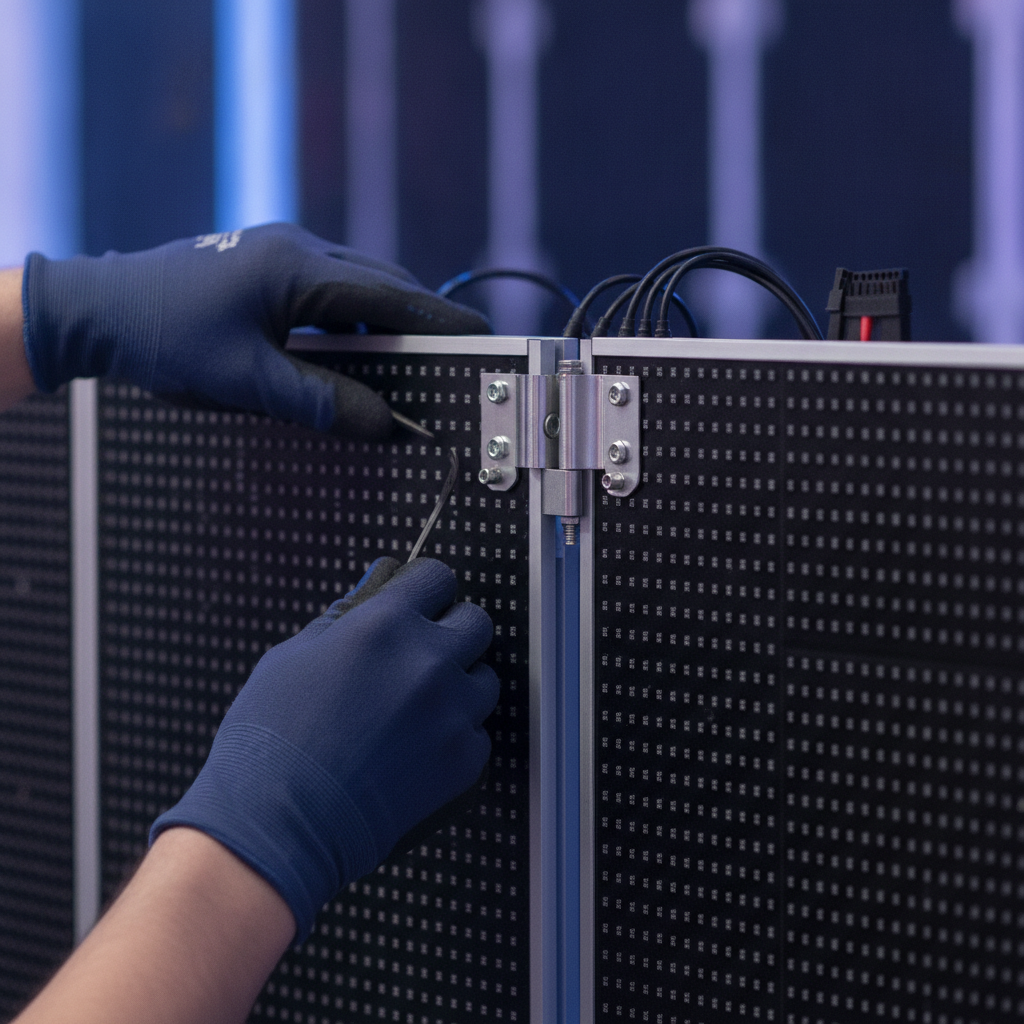
- LED walls: modular indoor panels with 800–1500 nits brightness. Pixel pitch is chosen for viewing distance; the closer the audience, the finer the pitch (e.g., 2.6 mm).
- Projection mapping: transforms architecture but needs controlled ambient light to punch through. Great for ceremonies and story segments.
- Content design: ambient loops, monograms, and performance backdrops synced to your palette and soundtrack.
LED wall content should avoid high-frequency patterns that cause moiré on camera. We test looks on phones as well as pro cameras to ensure social posts pop and live sightlines stay clean.
Audio design
- Zoned coverage: conversation areas run around 70–75 dB, while the dance floor peaks near 95 dB so the mix feels exciting up front and pleasant at the edges.
- Wireless mic planning: frequency coordination avoids dropouts; we stage backups to keep ceremonies and toasts fail-safe.
- Monitors and sidefills: performers hear clearly without raising main PA levels, protecting mix quality and conversation comfort.
Placement beats power. Well-aimed speakers with controlled dispersion reduce slapback and keep sound where it belongs. We walk the room during soundcheck to even out hot spots and fix dead zones.
Special effects & staging
- Cold sparks: indoor-safe spark fountains with defined clearances. We position units at safe distances and confirm rules during the site visit.
- Low fog: creates a cloud-dance moment; requires airflow planning so the effect hugs the floor and stays away from detectors.
- Staging: risers sized for visibility, glossy dance floors for reflection, and clean cable runs for safety and photos.
For inspiration on how thoughtful lighting and staging elevate guest impact, see these event-lighting overviews from industry venues, including event lighting basics and staging and production tips. While every room is different, the principles—sightlines, balance, and safety—apply everywhere.
Mid-article invite: Want one plan for DJ, lighting, LED walls, and logistics? Explore our full‑service event production approach and see how an integrated team keeps timelines tight and the dance floor full.
Best Practices That Keep Weddings Smooth and Stunning
Great production design balances wow factor with safety, timing, and guest comfort. Lock logistics early, design to the room, and coordinate cues so every transition feels intentional—from first look to last track—without stress or last‑minute scrambles.
These guidelines come from hundreds of shows where minor decisions changed everything. Use them as a checklist when you evaluate venues and plan your timeline.
- Design to distance: match LED pixel pitch and fixture angles to viewing ranges and sightlines so eyes never strain.
- Protect speeches: reduce moving-light movement and dim uplighting to about 30–40% during toasts; add gentle front wash around 3000–3500K.
- Power planning: separate audio and lighting circuits; aim to draw no more than ~70–80% of available power for headroom.
- Program scenes: pre-build looks for entrances, performances, toasts, and open dance; label cues clearly in the console.
- Route safely: tape and cover cables in traffic paths; protect FOH and server routes so service never stalls.
- Validate effects: confirm cold sparks, haze, and low fog permissions before booking. Have a no‑haze lighting plan ready as a fallback.
- Soundcheck where guests sit: walk tables and corners to adjust coverage; aim for consistent ~70–75 dB during dinner zones.
- Keep comms clear: crew headsets and a shared show document keep everyone on the same page as cues evolve.
If you’re exploring modern tech flourishes, here’s a practical roundup of guest‑pleasing features and how they read in a room: tech features that wow guests. Use lists like these to spark ideas, then tailor them to your venue’s power, rigging, and ceiling height.
Tools and Resources We Use
A reliable show needs the right toolkit: venue intelligence to verify feasibility, pro consoles for lighting and audio, modular LED walls, and documented logistics. These tools translate your mood board into a plan that respects power, rigging, and safety limits.
- Atlas venue intelligence: our in‑house platform that confirms capacity, rigging points, power availability, and effect permissions before anything is booked.
- Lighting control: DMX‑based consoles with pre‑programmed scenes and universes mapped for growth; we keep critical cues on dedicated pages for speed.
- Audio systems: scalable PAs with wireless mic redundancy and zoned control so conversation stays pleasant while the dance floor peaks.
- LED walls: indoor‑rated panels tuned for viewing distance and camera sensors; we test content for moiré and color balance.
- Operational logistics: truck plan, load‑in routes, cable management, and vendor communications documented in a shared run of show.
We also maintain a library of content loops and performance backdrops, color‑matched to common South Asian décor palettes. During programming, we balance haze output with HVAC so beams are defined without creating a visible cloud in photos or triggering sensors.
Mini Case Studies and Examples
Real pairings show how choices land emotionally: warm dinner looks that flatter photos, bold LED backdrops that energize performances, and crisp audio that makes elders smile and dancers stay late. Here are three composites based on our playbook.
- Ballroom reception in Midland: Warm uplighting for dinner at roughly 30–40% intensity, pin‑spots for toasts, then a magenta‑and‑gold palette with rhythmic moving beams. Cold sparks fire on the first‑dance chorus, coordinated to a tempo cue so timing feels cinematic.
- Outdoor sangeet: Stage risers with sidefills for performers, a bright LED wall backdrop for camera‑friendly visuals, and haze pulsed before moments so beams show without overhang. Zoned audio keeps edge tables near 70 dB while the dance area peaks closer to 95 dB.
- Destination weekend: Pre‑vis renders and an Atlas‑backed site plan match power and rigging before travel. Separate load‑in routes for staging and audio reduce congestion, trimming setup time and protecting the schedule.
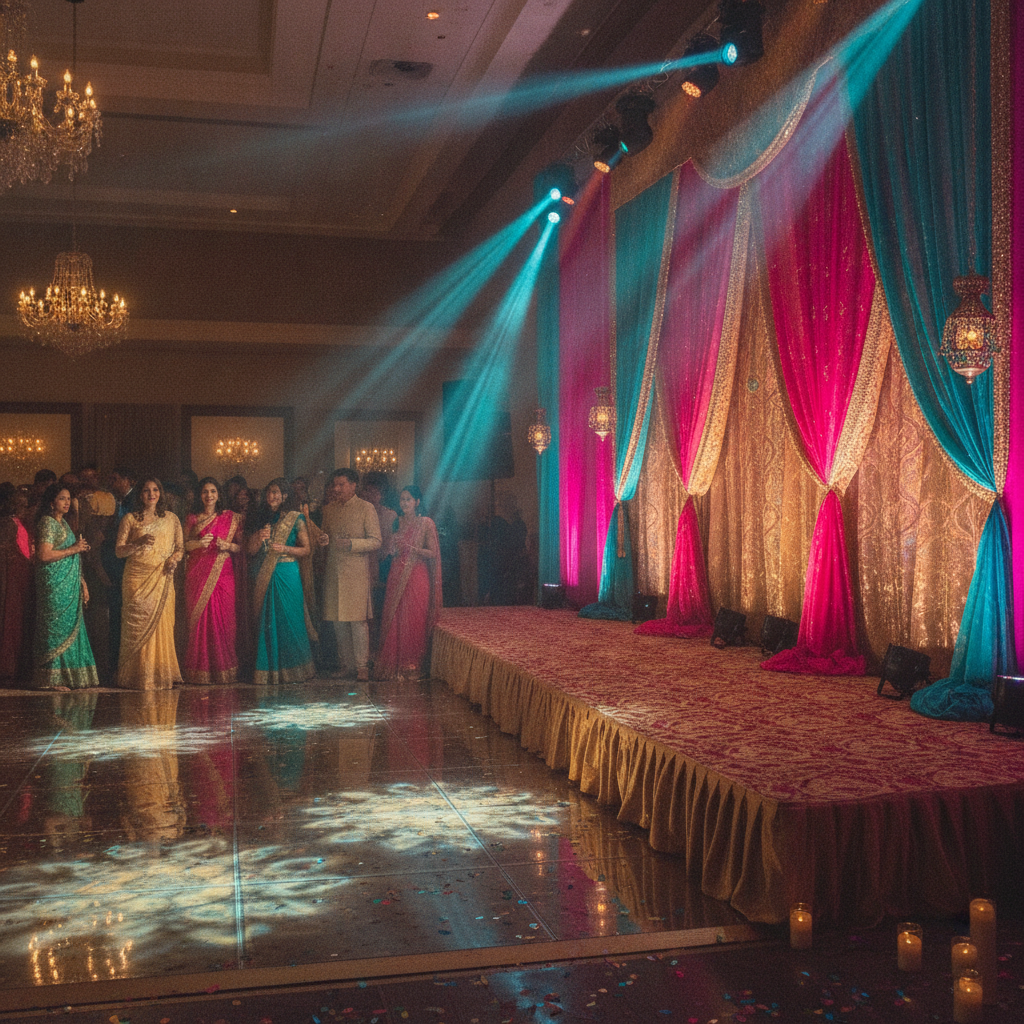
In all scenarios, the constant is intention. Every cue has a job: focus attention, release energy, or reset the room. When you align these cues with your cultural flow—entrances, performances, blessings, and dance sets—the night feels effortless and personal.
Local considerations
In Midland, venue access windows and local special‑effect rules shape design choices. Confirm load‑in routes, power tie‑ins, and permissions for haze and cold sparks early to avoid last‑minute changes and keep your run of show clean.
Local considerations for Midland
- Ask venues about load‑in timing and elevator access—these directly affect LED wall size and lighting rig choices.
- Summer heat changes outdoor sangeet plans: prioritize airflow, shade, and stable power for performers and guests.
- Confirm effect permissions (haze, cold sparks) during planning; prepare a no‑haze lighting look as a visual backup.
We routinely adapt designs to meet venue reality. For example, if haze isn’t allowed, we switch to tighter beams, higher contrast palettes, and more pin‑spotting to maintain “wow” without atmospheric effects.
Frequently Asked Questions
Couples often ask about safety, venue rules, and how all the pieces come together. These direct answers explain how a unified team designs, validates, and runs the show so every moment lands as planned.
What exactly does a production design team handle?
We design and run the full show: DJ and MC flow, lighting looks, LED content, audio coverage, staging, and special effects—plus the logistics that make it safe and on time. You get one integrated plan and one team on comms.
Are cold sparks and haze allowed at most venues?
Rules vary by venue and local authorities. We confirm permissions during the site visit and adjust the design if effects aren’t approved. Clearances, placement, and airflow planning keep looks dramatic and safe.
How do you keep elders comfortable while the dance floor stays loud?
Zoned audio and thoughtful speaker placement let us keep conversation areas pleasant while the dance floor stays energetic. We also shape lighting so speeches feel inviting and open dance feels electric.
What’s the timeline from consult to showtime?
Most weddings lock creative direction after the consult and questionnaire. We then finalize plots and logistics, complete the site visit, and coordinate the run of show with your planner—so load‑in and cues are ready well before event week.
Key Takeaways
Align creative vision with technical reality early, then program cues for key moments. Validate power, rigging, and effect rules, and keep audio and lighting comfortable during dinner while pushing energy on the dance floor.
- Production design is the blueprint that unites DJ, MC, lighting, visuals, audio, and logistics.
- Design to your room: sightlines, power, and ceiling height drive what actually works.
- Program scenes in advance; dim and warm the room for toasts, go bold for open dance.
- Use zoned audio so elders enjoy conversation while the dance floor hits hard.
- Confirm permissions for haze and cold sparks early; have visual alternatives ready.
Conclusion: Bring Your Story to Life
Production design turns wedding weekends into cohesive, emotionally resonant experiences. When DJ, MC, lighting, visuals, and logistics act as one, every moment feels intentional—and your guests remember how it felt long after the last song.
Here’s the simplest path forward:
- Share your music tastes, cultural must‑haves, and the moments you want guests to remember.
- Walk your venue with a production partner to validate power, rigging, and effect rules.
- Approve a plotted design with pre‑programmed cues for entrances, performances, toasts, and open dance.
Ready to align everything—Indian DJ and MC flow, lighting, LED walls, audio, staging, and logistics—into one seamless plan in Midland? Let’s start with a consult and an Atlas‑backed site visit so your show is engineered to land.
One Response