Audio visual events are productions that combine professional sound, lighting, screens, staging, and special effects to shape how audiences see, hear, and feel an experience. They turn venues into storytelling spaces using synchronized audio and visuals. In Midland, this means ceremonies, sangeets, and receptions run smoothly, sound clear, and look cinematic from the first announcement to last dance.
By Revel Entertainment • Last updated: July 5, 2026
Above-Fold Overview and TOC
Plan audio visual events by aligning story, schedule, and space, then engineering sound, lighting, LED visuals, power, and safety into one plan. A cohesive design prevents surprises, keeps energy high, and ensures every moment—from vows to first dance—lands emotionally and on time.
Here’s the quick view of what we’ll unpack and how to use it for a smooth, high‑impact celebration in Midland.
- What you’ll learn: clear definitions, planning steps, AV types, best practices, tools, and real Midland wedding examples.
- Who it’s for: couples, planners, and venues wanting reliable, wow‑factor production without day‑of stress.
- Problems solved: muddy audio, harsh lighting, timeline slips, effect restrictions, and layout/power confusion.
- What Are Audio Visual Events?
- Why AV Matters
- How AV Production Works
- Types of AV
- Best Practices in Midland
- Tools and Resources
- Case Studies & Examples
- FAQ
- Key Takeaways
- Conclusion
What Are Audio Visual Events?
Audio visual events are experiences engineered with sound systems, microphones, lighting, LED walls or projection, staging, and special effects. The production team designs, installs, and runs the gear so the program flows, speeches are intelligible, and visuals amplify the story without technical hiccups.
Think of them as story‑first productions. Sound supports vows and toasts. Lighting sculpts faces and dance floors. LED walls function as living scenery. Staging makes movement intentional. The goal isn’t gadgets; it’s emotion and clarity. During dinner, target speech levels often sit around 68–72 dBA at guest tables so elders hear comfortably without strain.
- Core elements: audio (mics, speakers, mixing), lighting (uplights, moving heads, profiles), video (LED walls, projection, cameras), staging (risers, runways), control (consoles, DSP), power (distribution, redundancy), and showcall (cues).
- Event types: weddings (ceremony, sangeet, reception), corporate galas, fundraisers, fashion shows, and concerts.
- Team roles: production designer, audio engineer, lighting director, video engineer, stage manager/MC, and tech crew.
At Revel Entertainment, our integrated team handles DJ, MC, lighting, LED walls, visual FX, sound, staging, and logistics as a single unit. For South Asian weddings specifically, we design for multiple chapters—baraat, sangeet, reception, and afterparty—so transitions feel effortless. Typical weekend shows span 6–12 wireless channels and 4–8 lighting looks per segment for clean, repeatable cues.
Why AV Matters for South Asian and Cultural Weddings
Great AV elevates emotion, protects the timeline, and respects cultural flow. It ensures vows are heard, entrances land, dances feel epic, and elders stay comfortable—while the production team quietly coordinates each cue behind the scenes.
Emotion thrives when production disappears into the moment. Clear speech makes toasts feel heartfelt. Balanced lighting keeps skin tones true in photos and video. Visuals cue the room that something special is happening. In Midland, we regularly balance dinner around 70 dBA and open‑dance around 90–95 dBC at the floor while maintaining comfortable zones for seated guests.
- Cultural fluency: smooth mic handoffs for performances, bilingual MCing, and music programming that moves from Bollywood and bhangra to hip‑hop and global hits.
- Timeline control: cue stacks and showcalling keep baraat, sangeet, and reception on track despite many moving parts.
- Guest comfort: even sound coverage, flattering front light, and seating layouts that keep elders close to audio hotspots.
We’ve found multi‑event weekends thrive when one production team supports every chapter. One showfile, one radio plan, one operations lead—less risk, faster changeovers, and consistent quality. See how we structure that on our full‑service production overview for a deeper dive into roles and deliverables.
How Audio Visual Production Works
A reliable AV workflow follows seven phases: consult, discovery, design, validation, logistics, installation, and showtime. Each phase reduces risk, aligns expectations, and locks details before trucks roll—so the event feels effortless on the day.
Most Midland wedding weekends benefit from a structured cadence. Expect a 45–60 minute consult, a design review 2–4 weeks later, and a venue site visit before show day. On average, full installs take 6–10 hours depending on load‑in path, rigging, and LED footprint. A clear plan avoids on‑site decision fatigue and protects the timeline.
- Consult: goals, vibe, guest count, and space sketch. We learn what “unforgettable” means to you.
- Discovery: music and mood questionnaire, run‑of‑show draft, special moments, and must‑play lists.
- Design: sound coverage model, lighting looks, LED wall canvas, and effect moments mapped to cues.
- Validation: venue reality check—capacity, rigging points, power, loading, effect rules—using Atlas venue intelligence.
- Logistics: timeline, crew, trucking, permits, radio channels, backup plans, and vendor coordination.
- Installation: load‑in, rig, test, tune, and rehearsal with the MC and performers.
- Showtime: stage management, live mixing, lighting cueing, video playback, and contingency handling.
| Phase | Primary Inputs | Outputs | Owner |
|---|---|---|---|
| Consult | Vision, guest count, floor plan | Concept brief | Producer |
| Design | Run‑of‑show, mood board | Lighting plot, audio plan, LED layout | Design lead |
| Validation | Venue specs, effect rules | Feasibility sign‑off | Technical director |
| Logistics | Schedule, vendors | Minute‑by‑minute, coms plan | Stage manager |
| Installation | Gear list, crew list | Ready‑to‑rehearse room | Crew chief |
Our Atlas platform often flags constraints early—like a ceiling that can’t take rigging loads or power panels that need distribution. Solving these upstream keeps show day focused on performance, not scrambling for workarounds.
Types of AV, Gear, and Effects
AV for weddings and galas includes distributed sound, intelligent lighting, LED walls or projection, stage elements, and special effects like low‑lying fog or cold sparks. The right mix depends on guest count, ceiling height, and the story you want to tell.
Design follows space and story. A 200‑guest Midland reception typically needs distributed speakers so back tables hear speech around 70 dBA while front tables stay comfortable. Dance floors come alive with 2–4 moving heads and subtle haze. LED walls (2.6–3.9 mm pixel pitch) look crisp from 15–30 feet, perfect for monograms and highlight loops.
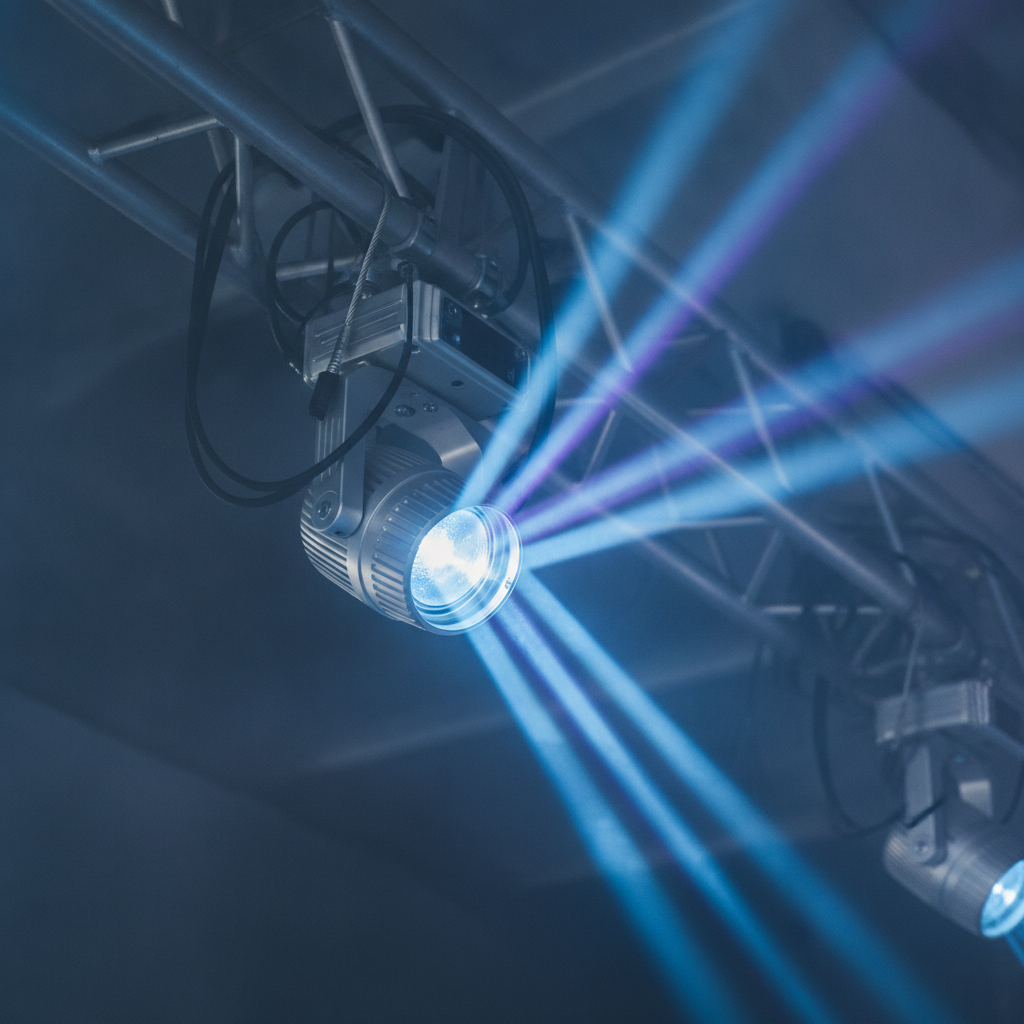
Sound system essentials
- Main speakers: full‑range boxes or compact arrays placed for even coverage so front tables aren’t blasted while back tables still hear clearly (aim for ±3 dB variance across the room).
- Subwoofers: musical low‑end for dance energy without rattling dinnerware; many rooms thrive with 2–4 subs in cardioid or spaced placement.
- Microphones: handhelds, lavs for officiants, and a backup pair ready at all times to avoid dead air during vows or toasts.
- Mixer and DSP: scene‑based showfiles, EQ for room acoustics, and gentle compression to keep speech intelligible even as guests cheer.
Lighting that tells a story
- Uplighting: warm color to frame the room and match your palette; 2700–3200K reads cozy, 4000–5000K reads modern.
- Profiles and washes: key light for toasts, pin‑spots for decor, and soft washes for ambiance so photo skin tones stay natural.
- Moving heads: dynamic looks for entrances and open dance; aerials with subtle haze (maintain clear egress and line‑of‑sight).
- Dance floor lighting: looks that move with the beat without blinding guests or affecting photographers’ focus.
Visuals that transform space
- LED walls: concert‑grade backdrops for content, monograms, and live camera—pixel pitch chosen for viewing distance (e.g., 2.6 mm at ~20 ft).
- Projection mapping: turns architecture into living sets for sangeet or first‑dance reveals when LED isn’t practical.
- Cameras and playback: live IMAG for large rooms and highlight loops between program segments.
Special effects and staging
- Cold sparks: indoor‑safe spark fountains when permitted; typical safe radii start at several feet with clear overheads.
- Low‑lying fog: a cloud‑like first‑dance moment; coordinate HVAC so the effect hugs the floor for photos.
- Confetti or snow: finale effects with clear cleanup and slip‑hazard mitigation plans.
- Staging: risers, runways, and safety rails sized to performances and sightlines; keep 3–6 feet of egress pathways clear.
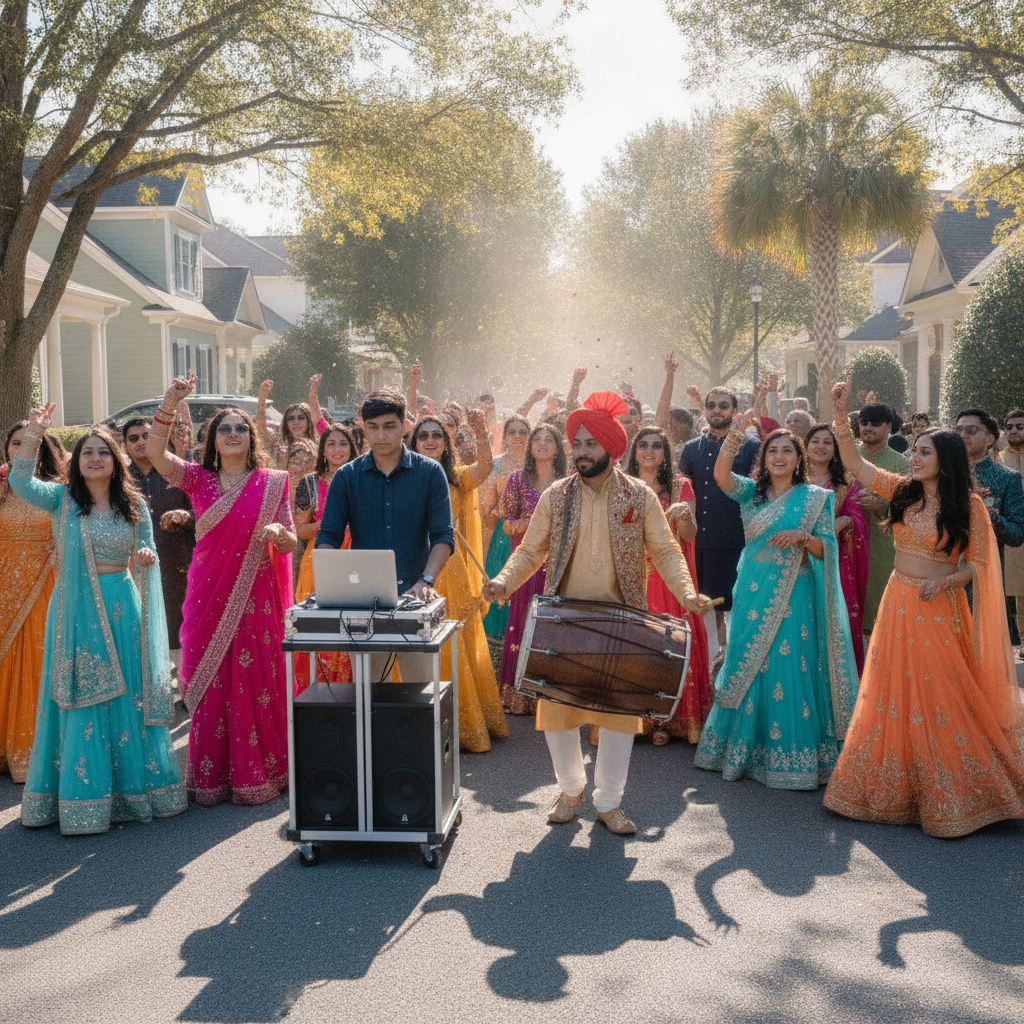
For baraat, we often deploy a mobile DJ cart with battery power, weather‑ready speakers, and a wireless mic for announcements. That keeps the energy up while the procession moves and avoids generator noise on video.
Best Practices for Flawless AV in Midland
Design for emotion first, then engineer for the room. Lock rules early, build a realistic timeline, and keep one integrated team across your weekend. In Midland, think about heat, humidity, and power access during outdoor segments like baraat.
Great productions feel inevitable—like everything just happened exactly when it should. That comes from early choices you can control. We routinely align vendors on a minute‑by‑minute and a shared coms plan. Wireless coordination reduces dropouts; power distribution with proper breakers and cable ramps keeps guests safe. A few best practices make the difference:
- Lock venue rules: confirm cold sparks, haze/fog, confetti, and load‑in windows well before you design your looks. It prevents rework and last‑minute compromises.
- Engineer for faces: flattering front light and consistent skin‑tone rendering so photos look natural; avoid deep color washes on speakers during toasts.
- Mix for speech first: prioritize intelligibility for vows and toasts; save big bass for open dance. Guests remember words and moments.
- One radio plan: coordinate wireless mics and in‑ear frequencies for clean channels; 6–12 coordinated channels is common for multi‑event weekends.
- Plan for weather: shade, hydration, and battery power for outdoor baraat during warm Midland afternoons; keep electronics under cover.
- One team, one showfile: keep the same crew and console files from sangeet to reception for consistency and faster transitions.
Local considerations for Midland
- Outdoor events benefit from shaded staging and weather‑tolerant gear; summer heat can impact electronics and guest comfort.
- Early confirmations with venues help align effect permissions (like haze or cold sparks) and prevent last‑minute changes.
- Weekend timelines move smoother when a single production team manages sangeet, baraat, and reception with shared showfiles.
Curious how a single team changes the feel of a night? Our event logistics guide and operations framework show the behind‑the‑scenes work that keeps programs on time and stress low.
Tools and Resources We Trust
Professional results come from the right tools and standards: venue‑intelligence checks, reliable power distribution, frequency coordination, and effect safety guidelines. Aligning with industry best practices reduces risk and keeps your celebration compliant and comfortable.
Clear standards support better outcomes. We align our practices with common guidance on noise exposure, special‑effects safety, and crowd movement principles when applicable to public or large‑format events. For checklists and primers useful to planners and venues, see these overviews of event AV checklists and event lighting basics. For deeper technical reading, see an explainer on integrated acoustic lighting systems.
- Atlas venue intelligence: our in‑house platform that validates capacity, rigging, power, and effect rules before booking.
- Power and safety: distribution with proper breakers, cable ramps, and load calculations to protect guests and gear.
- Wireless coordination: frequency scans and assignments for dropout‑free microphones; document channels in your showfile.
- Effect standards: thoughtful placement, trained operators, and clear egress pathways for any sparks, fog, confetti, or snow.
- Show documentation: plots, cable maps, minute‑by‑minute, and cue sheets shared with your planner and venue.
Want a music‑driven perspective on all this? Explore our playbook for keeping the floor packed in Indian DJ weekend design—it shows how programming, mics, and lighting work in lockstep.
Case Studies and Real Examples
AV success is visible in the moments: crystal‑clear vows, a packed dance floor, and visuals that feel like your story. Here are scenarios showing how integrated production turns moving parts into a seamless experience.
Midland reception, 250 guests: distributed speakers for even sound, warm uplighting, moving heads for entrances, and an LED wall showing a custom sangeet motif. One showcaller kept toasts tight and transitions smooth. Dinner sat near 70 dBA; open dance peaked around 95 dBC at the floor while side seating stayed comfortable.
- Baraat on a sunny afternoon: mobile DJ cart, dhol drummer, wireless handheld for announcements, and shaded staging to protect gear and guests. The procession stayed hyped and on schedule with 30–45 minutes of continuous music.
- Sangeet performances: monitors for singers, pin‑spots on performers, and a short rehearsal. A bilingual MC handled transitions and guest shout‑outs with no dead air.
- Reception dance floor reveal: first‑dance low fog approved in advance, with HVAC coordinated for a cloud effect that stayed low for photos.
| Approach | Pros | Risks | Best for |
|---|---|---|---|
| DIY rentals | Hands‑on control | Setup complexity, no operator, limited safety checks | Small, informal gatherings |
| Separate vendors | Specialized pieces | Coordination gaps, finger‑pointing when issues arise | Events with simple AV |
| Integrated production partner | One team, one plan, cohesive design | Needs early consult | Multi‑event weddings and galas |
In our experience, a single integrated team prevents the classic “who owns this problem?” scramble. Fewer variables, more focus on you. And because our DJ, MC, lighting, LED walls, FX, and logistics are engineered together, changeovers average minutes, not half hours.
FAQ: Audio Visual Events
An AV partner designs, installs, and runs sound, lighting, and visuals so your timeline stays tight and your moments land. Book after you lock a venue; one integrated team can carry the same showfile across all weekend events.
What exactly does an AV team handle on the day?
We load in, install, test, and run all sound, lighting, visuals, and effects. We also manage cues, wireless frequencies, and vendor coms, and we support your planner with time checks so the program stays on schedule.
How early should we book audio visual production?
Book once you have a venue and rough guest count. That allows proper sound coverage planning, lighting design, and effect permissions. Many couples confirm AV 6–12 months out to align with decor and entertainment decisions.
Can you support multiple events in one weekend?
Yes. We design once and carry the same showfile across sangeet, baraat, and reception with the appropriate gear for each chapter. That keeps transitions fast and the experience consistent.
Do cold sparks and fog work in all venues?
Not always. Effect permissions vary by venue and local rules. We confirm feasibility during our Atlas venue intelligence check and design alternatives if a specific effect isn’t allowed.
Key Takeaways
Use one integrated team, validate the venue early, and design for emotion before gear. Lock timelines, effect rules, and wireless plans upfront so show day feels smooth, safe, and unforgettable.
- Audio visual events shape how guests feel and remember your celebration.
- In Midland, plan for outdoor heat and indoor effect rules early.
- One vendor across DJ, MC, lighting, LED walls, and logistics keeps the weekend cohesive.
- Simple standards—clear speech levels, flattering light, smart visuals—deliver the biggest impact.
Conclusion: Ready to Wow?
The best AV isn’t loud—it’s intentional. When story, schedule, and space align, every mic, light, pixel, and cue serves your moment. If you want the wow without the worry, partner with one experienced, culturally fluent production team.
We love crafting South Asian and multicultural wedding weekends that feel personal and modern. If you’re planning in Midland or beyond, we’re ready to design, validate, and deliver your weekend from baraat to afterparty—so you can be fully present in your moment. When you’re ready, start with a consult and a venue reality check through Atlas so every decision is grounded in what your space can safely support.
Related Articles and Planning Topics
If you’re mapping a full wedding weekend, explore topics like integrated logistics, culturally fluent DJ/MC planning, and visual storytelling with LED walls. These concepts help align vendors and reduce day‑of surprises.
- How integrated event logistics protect timelines and simplify decisions.
- Designing a South Asian DJ/MC flow from baraat to afterparty.
- Using LED walls and projection mapping as living backdrops for key moments.
- Creating guest‑friendly sound zones for elders and families with kids.
One Response